
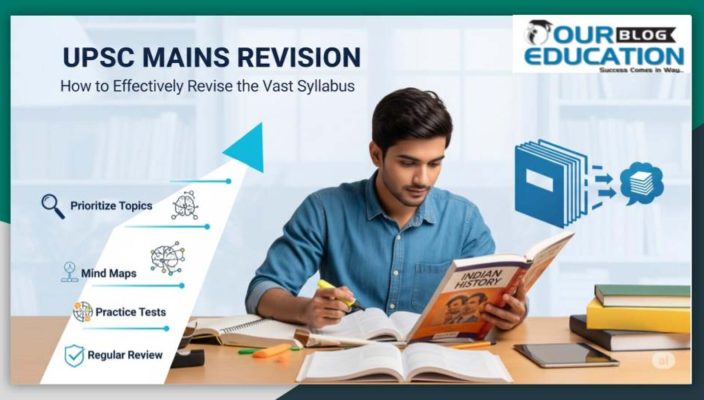
How to effectively revise the vast UPSC syllabus before Mains?
Last Updated: Aug 5, 2025
UPSC syllabus: A view of the UPSC Civil Services Mains Examination portrays it as a gargantuan exam, one of the most comprehensive and intellectually demanding in the country. Aspirants view revising for the Mains as a huge hurdle with multiple GS papers, Optional subjects, Essays, and Ethics; however, with the right kind of strategy and structured guidance, effective revision can be achieved. The article aims to delve into some practical tips and methods for revision by trusted mentors at Plutus IAS, a premier and reputed name in the training world for the UPSC.
Understand the Nature of the UPSC Syllabus for Mains Exam
First things first, before starting an effective revision, one needs to understand what the UPSC Syllabus for Mains want from an aspirant. The things they need to learn are not information retrieval, but include-
- Analytical writing
- Interlinking of static and current affairs
- Present opinions with examples
- Keep time and word limit considerations in mind
Hence, updating one’s brain once with notes, as in a rereading session, is simply not enough. It is this kind of revising that teaches your brain to supply answers quickly and with quality under stress.
1. Aim for a Weekly and Daily Revision Timetable
The UPSC Syllabus for Mains should be broken into appropriate little pieces. One must then build a timetable for the following activities:
- General Studies-wise revision
- Topics of the Optional Subject
- Brainstorming for Essay
- Case Studies for Ethics
Create a revision timetable with weekly targets. Use colour codes to mark completed topics. Institutions like Plutus IAS help aspirants develop customised study schedules to ensure time-bound coverage.
2. From Condensed Notes: Resisting Time
It is a stage where bulky books or raw sources can barely find efficiency. Only concentrate on:
- Self-prepared notes
- Coaching handouts
- Value-added materials (say, toppers’ notes, summary booklets)
In Plutus IAS, topic-wise summary booklets and current affairs compilations for quick revision are given to aspirants.
3. Integrating Current Affairs with Static Syllabus
Before Mains, revision of the UPSC syllabus is best achieved with concurrent revision of current affairs with GS topics. Some examples:
- Newest economic data in answers to GS Paper 3
- International relations vis-à-vis the foreign policy of India
- Case Studies in Ethics
Plutus IAS offers editorial analysis for each day and special classes to enable students to make these interlinkages.
4. Answer Writing During Revision
Mains’ revision without writing is incomplete. At least one hour a day should be spent writing answers. Write answers:
- Three to four for General Studies each day
- One essay per week
- Case studies for Ethics on alternative days
Join a UPSC Mains Test Series like Plutus IAS to get expert feedback and suggestions for improvement.
5. Reverse Engineering and Analysis
Start working backwards from the previous year’s questions:
For each PYQ:
- First, identify the topic it belongs to
- Thereafter, revise the topic in your notes
- Practice writing a new answer incorporating updated examples
The Institute of Plutus IAS mentors and guides aspirants on analysing UPSC PYQs smartly for revision.
6. Special Focus on Optional Strategy
- Optional papers yield the most marks. Keep the strategy for their revision separate:
- Give preference to those topics which yield maximum marks
- Practice diagrams (in case of Geography, Anthropology, etc.)
- Revise thinkers and case studies (Sociology, PSIR, etc.)
The Plutus IAS faculty conducts separate revision and answer-writing practice classes for optional subjects.
7. Mock Tests and Time Management
- Full-length mock tests mimic the actual exam and help in:
- Allocating proper time for each question
- Improving speed and structuring answers
- Reducing anxiety on the examination day
Join a full-time mock test series like one from Plutus IAS to benchmark your preparation.
Conclusion
Before Mains comes the smart revision of the expansive UPSC syllabus, involving a blend of smart planning, focused preparation, and practice. Do not try to grasp anything new now; what needs to be done is to reinforce the existing knowledge. Make smart use of the coaching resources, adhere to the timetable, and keep writing answers. Apart from curated study material, Plutus IAS provides mentorship and a test series crucial to revision for Mains. Keep in mind that quality revision with feedback is far better than mindless repetition. Stay calm and focused, with the wisdom to trust your preparation. Smart revision holds the key to success, rather than re-reading everything.
Follow the Blogoureducation Channel on WhatsApp
To get the latest updates, connect with the Education YouTube channel
Related article
- Plutus IAS Coaching Institute in Delhi Review
- Vajiram and Ravi IAS delhi reviews
- best ias coaching in Karol Bagh
- Best Online UPSC Preparation
- UPSC Coaching in India
- best ias coaching in delhi
- best ias coaching in Ghaziabad
- Drishti IAS Classroom Coaching Delhi Reviews


Discover more from Our Education | Best Coaching Institutes Colleges Rank
Subscribe to get the latest posts sent to your email.
« UPSC Exam Preparation: Risks of Relying on Unverified AI Content for Preparation Essential Self-Care Tips for UPSC Aspirants »
Tell us Your Queries, Suggestions and Feedback