

Gamini Singla UPSC AIR 3 Success Story: Strategy, Books & Lessons
Last Updated: May 12, 2026
The Gamini Singla UPSC AIR 3 success story is one of the most inspiring journeys in recent Civil Services history. A young engineer from Chandigarh who balanced full-time work with relentless preparation, Gamini secured All India Rank 3 in her UPSC attempt. Therefore, her story offers practical lessons for working professionals, women aspirants, and anyone who fears that an engineering background limits them in this exam.
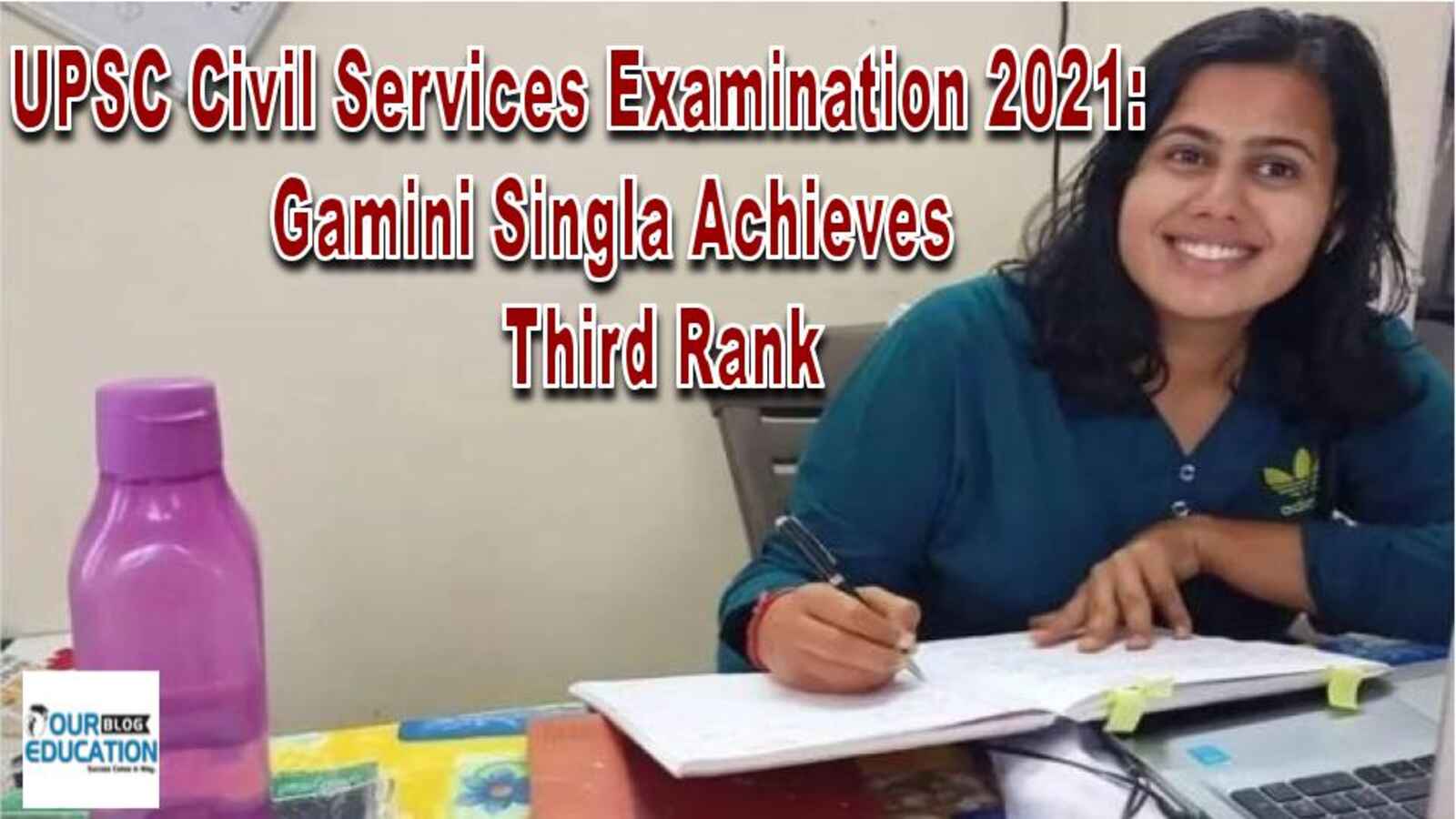
This guide decodes the choices she made, the schedule she followed, and the habits she relied on. As a result, you will see exactly which parts of her approach you can adopt for your own preparation.
Background and the Path to AIR 3
Gamini Singla is a Computer Science engineer who began her UPSC preparation while working in the IT sector. After clearing the exam in an earlier attempt with a respectable rank, she aimed higher and re-strategised her preparation. Consequently, she earned All India Rank 3 in her successful attempt — a result that came from disciplined revision rather than fresh content collection.
For aspirants exploring the exam from scratch, the official UPSC website is the authoritative source for syllabus, notification, and pattern. Bookmark it and revisit it each cycle.
Her Optional Subject — Sociology
A key element of the Gamini Singla UPSC AIR 3 success story was her choice of Sociology as the optional. Specifically, the subject works for engineering graduates because the syllabus is short, conceptually intuitive, and overlaps with General Studies Paper 1 on society, women, and social justice. Therefore, her hours compounded across multiple papers.
Moreover, Sociology rewards answers that link theory with current Indian examples. As a result, her engineering analytical training translated naturally into structured, example-rich responses. For comparative reviews of other optionals, browse our UPSC strategy archive.
Daily Study Schedule
Gamini followed a strict daily routine of 9 to 11 hours of focused study during the final months. However, she ramped up gradually rather than starting at peak intensity. Specifically, her day broke into three blocks:
- Morning: Static GS topics with NCERTs and standard references.
- Afternoon: Sociology optional preparation and mains answer writing.
- Evening: Current affairs reading, note-making, and mock-test analysis.
Furthermore, she avoided social media during study windows and reserved Sunday afternoons for full-week revision. Consequently, her effective study hours were higher than the clock suggested.
Prelims Strategy
For Prelims, Gamini relied on a tight resource list and multiple revisions. Specifically:
- NCERTs from Class 6 to 12 across History, Geography, Polity, Economy, and Science.
- Laxmikanth for Indian Polity.
- Spectrum’s Modern India.
- Ramesh Singh for Indian Economy.
- Shankar IAS Environment.
- Monthly current affairs from a single trusted compilation.
In addition, she attempted over 50 prelims-style mocks. Importantly, she spent twice as much time on mock analysis as on the mock itself. As a result, her elimination skills sharpened and her score consistently cleared the cutoff with a comfortable margin.
Mains Answer-Writing Approach
Mains is where the Gamini Singla UPSC AIR 3 success story stood out. She began answer writing four months before the exam and built a fixed structure for every answer:
- Introduction: One or two sentences framing the question.
- Body: Three to five subheadings with concrete examples.
- Conclusion: Forward-looking observation or policy suggestion.
Moreover, she incorporated recent examples from government schemes, Supreme Court judgments, and Niti Aayog reports. For high-quality policy references that consistently appear in mains, the NITI Aayog official site is an authoritative resource.
Essay and Ethics Preparation
Gamini practised one full essay every week. Specifically, she alternated philosophical topics with factual ones and built a personal bank of quotes, anecdotes, and case studies organised by theme. Consequently, on exam day she had ready material for either kind of essay topic.
For Ethics (GS Paper 4), her approach combined theory with case-study practice. She used a fixed framework: stakeholders, ethical dilemmas, possible options, recommendation with justification. Furthermore, she illustrated theory questions with Indian examples drawn from administration, judiciary, and public life.
Interview Preparation
The interview score for AIR 3 was strong. Gamini credits this to honest self-introspection rather than rote answers. Specifically:
- She prepared a detailed Detailed Application Form (DAF) breakdown.
- She practised mock interviews with multiple panels.
- She stayed calm and acknowledged knowledge gaps gracefully.
Therefore, her personality scored well across confidence, clarity, and integrity — exactly the qualities the board explicitly looks for. For more on the interview stage, see the official UPSC Civil Services Examination page.
Lessons for Working Professionals
Several elements of her journey translate directly for working aspirants:
- Front-load when you can: She used early-morning and weekend hours strategically.
- Quality beats quantity: Six months of focused work plus a strong foundation beats twelve months of unfocused study.
- Support system matters: She acknowledged the role her family played in caregiving and emotional support.
- Self-belief over external noise: She filtered advice and trusted her own routine once she found what worked.
If you are preparing alongside a job, audit how many quality study hours you can extract from each week. Then optimise ruthlessly. Furthermore, set clear weekend boundaries so revision actually happens.
Books and Sources She Recommended
Across interviews, Gamini has named the standard list — NCERTs, Laxmikanth, Spectrum, Ramesh Singh, Shankar Environment, PIB releases, and a daily newspaper. Moreover, she emphasised revising the same source four or five times rather than collecting new books late in the cycle. As a result, her mental recall during the exam was sharp and confident.
Common Themes Across the Gamini Singla UPSC AIR 3 Success Story
A few themes run through her entire approach:
- Limited sources with multiple revisions.
- Daily answer writing started early in the cycle.
- Mock-test analysis over mock-test count.
- Sustainable schedule with proper sleep and recovery.
- A growth mindset that converted an earlier attempt into data, not failure.
Consequently, her preparation transformed from scattered effort into a tight feedback loop. That is the engine behind any top rank.
Key Takeaways from the Gamini Singla UPSC AIR 3 Success Story
To summarise, her journey rests on disciplined hours, limited high-quality sources, daily mains answer writing, deep mock analysis, and emotional resilience. Above all, her story proves that an engineering background, a full-time job, or an earlier underwhelming attempt is not a verdict — it is the starting line for a smarter strategy.
For more topper journeys and the latest exam coverage, browse our UPSC category on the blog. We wish every aspirant focused preparation and a strong final rank.
Discover more from Our Education | Best Coaching Institutes Colleges Rank
Subscribe to get the latest posts sent to your email.
« Best 10 Vocational College in Chennai Top IAS Coaching in Jaipur in Hindi Medium »
Tell us Your Queries, Suggestions and Feedback