

IES (Indian Engineering Service)
Last Updated: Jan 25, 2025
IES (Indian Engineering Service)
IES are the civil services that meet the technical and managerial functions of the Govt. of India. Like most countries the Government of India recruits its civil servants and officials on the basis of merit, middle management positions in the bureaucracy are filled through competitive exams. The IES officers are selected by the union government on the recommendations made by the Union Public Service Commission (UPSC) through a combined four-stage competitive examination comprising six tests that are called the Engineering Services Examination (ESE) which is conducted by the UPSC for recruitment to the Indian Engineering Services.
IES Syllabus branches:
i. Syllabus for Electrical Engineering IES
ii. Syllabus for Mechanical Engineering IES and slideshow
iii. Syllabus for Civil Engineering IES
iv. Syllabus for Electronics and Telecommunication Engineering IES
v. Syllabus for General Ability IES
Syllabus for Electrical Engineering IES 
Electrical engineering follows academic discipline which is recognized by the academic journals in which research is done. Electrical Engineering is said to be a branch of knowledge that is obtained at the college level. The field of EE first became an exclusive occupation in the late nineteenth century after the commercialization of electrical power supply and electric telegraph now this field covers a range of subtopics which include telecommunication, control systems, signal processing, and power electronics.
Syllabus for Mechanical Engineering IES 

Mechanical Engineering is considered one of the oldest and the most diverse types of engineering fields. It consists of a variety of concepts like mechanics, thermodynamics, robotics, and fluid mechanics. In general, mechanical engineers design, develop, and maintain different kinds of machines and systems, such as engines, heating and cooling systems, and other devices that are of a mechanical nature. Testing, manufacturing, and assuring the whole efficiency of such systems are among their responsibilities.
Syllabus for Civil Engineering IES 
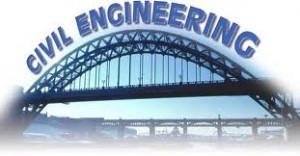
Civil Engineering deals with the design, construction, and maintenance of physical infrastructure with roads, bridges, canals, dams, and buildings. It is, in fact, one of the oldest engineering disciplines, whereby its ability to formulate part of the built environment is characteristically as old as human progress.
Syllabus for Electronics and Telecommunication Engineering IES 
Electronics and Telecommunication Engineering deals with microprocessors, electronic components, and integrated circuits. It also deals with designing, testing, fabricating, supervising, and maintaining electronic components. The field of Electronics and Telecommunication Engineering encompasses all fields of human existence.
The radio, telephones, television, computers, office machinery, automobiles, household appliances, space vehicles, and life-saving medical equipment represent the relevance of Electronics.
Syllabus for General Ability IES
English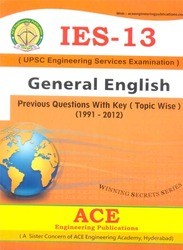
1. Grammar and vocabulary
2. Comprehension
3. Verbal reasoning
General Knowledge
1. Current events
2. History of India
3. Geography of India
4. Indian polity
5. Economy
6. Science and technology
7. Environment and ecology
Reasoning and Analytical Ability
1. Logical reasoning
2. Data interpretation
3. Problem-solving
4. Analytical reasoning
The selection through the Engineering Services Examination takes place through two stages:
- Written Tests & Personality Tests.
- The candidates who qualify for this written test will be called for a personality test. Written tests carry 1000 marks while the personality test carries 200 marks.

Discover more from Our Education | Best Coaching Institutes Colleges Rank
Subscribe to get the latest posts sent to your email.
« Exams for MBA in India Which NCERT Books Are Required For UPSC CSE? »
Tell us Your Queries, Suggestions and Feedback