
GLOBAL WARMING AND ITS ADVERSE EFFECTS
Last Updated: Feb 22, 2013
Ever imagined about swimming and sailing in warm oceans? Ever imagined the earth without ice in its poles? Well, if not, start thinking of it because global warming is taking us on the verge of it due to modestly high temperature rise in pat few centuries.
Global Warming is an average increase in the temperature of the atmosphere near the earth’s surface and in troposphere, which can contribute to changes in global climate patterns.
CAUSES OF GLOBAL WARMING:
The main causes of global warming are:-
- Greenhouse Gases (GHG)
- Ozone Depletion
- Aerosols in the atmosphere.
 However the causes may be split into two groups, man-made or anthropogenic causes and, and natural causes.
One natural cause is a release of methane gas from arctic tundra and wetlands.
Man-made causes are population and pollution. Population and pollution are directly proportional to each other and produces most of the GHG like Carbon dioxide, CFCs, methane, nitrous oxide, etc.
CONSEQUENCES AND ITS ADVERSE EFFECTS:
Global warming has a great and direct impact on rising sea levels, melting ice-caps and significant worldwide climate changes. It proves to be a fundamental threat to all living things on the earth.
Figures released by Munich Re, one of the world’s largest reinsurance companies at the end of Dec 1998 indicated that natural disasters across the globe were 3-fold now as of then 25 years ago.
The human cost of some 50,000 death alone is high. Floods during the year were responsible for 85% of economic losses of about $1 b, 9 times more in real terms than 25 years ago.
Paleoclimate information supports the interpretation that the warmth of the last half century is unusual in atleast the previous 1300 years. The last time the polar regions were significantly warmer than present for an extended period (about 125,000 years ago), reduction in polar ice volumes led to 4 to 6 meters of sea level rise.
Large tracts of low lying land across the globe are rapidly becoming uninsurable notably those in the Carribean, Pacific and parts of Asia.
The Intergovernmental Panel on Climate Change(IPCC) currently estimated that global warming is occurring at a speed of between 1.4 – 6.4 degree centigrade every century which sounds modest but could raise the sea-levels upto 1m in the same period.
Some 20 states including the Maldives, Nauro, Kiribati, the Seychelles, Antigua, Barbuda and the Federated States of Micronesia are at risk of becoming uninhabitable through the saline pollution or through simply being submerged.
It is projected that 80% of the main island and its capital will be under water within a century. Vulnerable coastal cities range from New Orleans in the USA to Bangkok, Hong Kong, Shanghai, and Tokyo in Asia.
By 2020, 75-250 million people of Africa will be exposed to water scarcity due to climate change.
SHIFTING SPECIES:
Approximately 20-30% of plant and animal species are likely to beat increased risk of extinction if increase in global temperature exceeds 1.5-2.5 degree centigrade.
Of over 1,400 species analyzed , ranging from fish and mammals to grasses and trees, over 80% are migrating to higher latitudes or higher elevations and altering their annual routines in response to global warming. Amphibians have also shown particular vulnerability.
In mountains around the globe, many species, including the golden toad and most of the 70-odd species of harlequin frogs, have vanished or declined because of diseases spurred by climatic changes.
KILLER HEAT WAVES:
Human caused global warming may have already doubled the chance of killer heat waves like the one that hit Europe in July and August of 2003. That summer was likely the continent’s hottest in 500 years. The relentless heat killed almost 27,000 people, breaking all records worldwide for heat induced human facilities.
In April-June 1998, 3,028 people died in the most disastrous heat wave to ever hit in India. In 1995, a five-day heat wave caused 525 deaths in Chicago, with the 41 degree centigrade reading on July 13 the warmest july temperature ever measured.
DAMAGE TO CORAL REEFS:
The last 25 years have witnessed a higher incidence of coral bleaching events which can lead to coral death. In 1997-1998 alone, the largest bleaching record seriously damaged 16% of the reefs in the world and killed 1,000-years old corals. Mass bleaching are usually caused by excessively high temperatures.
VANISHING GLACIERS:
Glacier National Park in Montana, had lost two-third of its ice since 1850; with uncontrolled warming, the remaining glacier could disappear by 2030.
It is estimated that the Gangotri Glacier, the source of the sacred river Ganges in India would be gone as soon as by 2030 due to global warming.
In European Alps, ice that had hidden and preserved the remains of a Stone Age man melted for the first time in 5,000 years. Venezuela had six glaciers in 1972, but now has only two; these too will melt away in the next ten years.
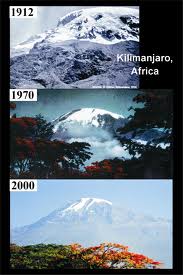 In Africa, 82% of the ice on Mt. Kilimanjaro had disappeared since 1912, with about one-third melting in just the last dozen years.
The National Snow and Ice Data Center (NSIDC) is now set to give updates about the surface melting on the Greenland Ice Sheet. The 2012 melt season was far greater than any year which began in 1979. There were over 120 melt days for low elevation areas along the south-west coast. There were over 100 melt days across parts of far north and south-east coastal areas. Melting in 2012 lasted almost two months longer than average. There was even some melting at the 10,000 foot elevation summit in July, which is extremely rare.
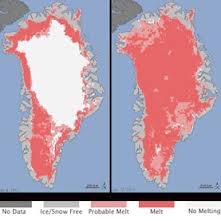
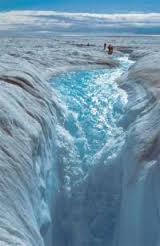
The other effects of Global Warming are:
- Increasing temperature and acidity of the oceans.
- Warmer winters
- Frequently deadly heat waves.
- Loss of biodiversity
- Gender bended lizards
- The north-west passage comes to reality
- Giant sand-seas in Africa, and many more.
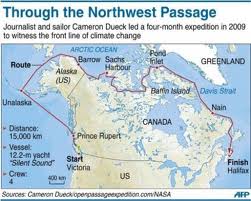 The north-west passage is a short-cut between Atlantic and Pacific oceans through the Canadian Arctic.It would save some valuable time and fuel for ships that travels through Suez canal in Egypt and Panama canal in Central America.It became reality 30 years before the scheduled time.
PREVENTION:
Carbon Taxation and Carbon Trading approach came to curb the global warming. Taxation in some form is certain to come and modest initiatives have been taken by the UK with an introduction of the Climate Change Levy (CCL) and in Germany.
Other preventive measures of global warming are :

- Reduced use of Fossil fuels.
- Plantation
- Water conservation
- Recycling of products
- Use of public transportation, etc.
Discover more from Our Education | Best Coaching Institutes Colleges Rank
Subscribe to get the latest posts sent to your email.
Global warming is the big burning issue in today’s world. Real cause of global warming is human beings.
Many people knows about global warming and its effects but they ignore that.This little carelessness lead us to hell.So human beings should take this matter seriously because everybody wants to live,nobody want to die.
This article is very good to aware people of global warming. After Reading this article i came to know how global warming is changing this beautiful earth. so we need to serious about this matter.
Man-made global warming is the widely accepted theory that human industrial and commercial activity is quickly heating up the Earth. Many scientists believe this rise in temperature could render large parts of the planet uninhabitable.Climatologists, who predict short and long-term climate trends, believe carbon dioxide and other emissions, mainly from industrial and commercial activity over the last two centuries, have altered the Earth’s atmosphere. This change has caused a “greenhouse effect” which is rapidly warming the planet.The predicted effects of global warming include the melting of polar ice caps; a significant rise in sea levels; more extreme weather events; a reduction in agricultural land; water shortages; food shortages; loss of rain forests; and more species becoming extinct.Scientists believe all nations must take immediate and urgent action to dramatically reduce carbon emissions. Technological solutions have been proposed, ranging from “carbon scrubbers” that remove carbon from the atmosphere and reduce greenhouse gases to placing giant mirrors in space to reflect enough sunlight to cool down the planet.