
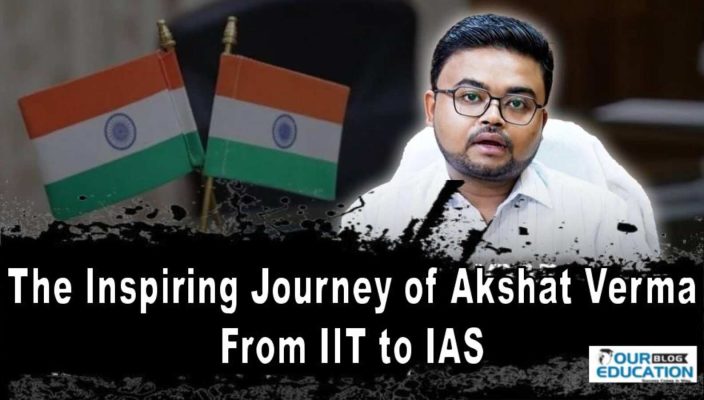
From IIT Roorkee to IAS: Akshat Verma’s Journey, UPSC Strategy & Lessons
Last Updated: May 6, 2026
Akshat Verma’s journey from a small town in Uttar Pradesh to becoming an IAS officer of the 2017 batch is one of the most cited examples of how a clear vision combined with disciplined preparation can transform an engineering graduate into a senior civil servant. From the Army Public School in Ayodhya to IIT Roorkee, then to UPSC Civil Services Examination, and now serving as Municipal Commissioner of Varanasi, Akshat’s story offers practical lessons for every IAS aspirant in 2026.
This article tells his complete journey, the strategy he followed for UPSC CSE, the optional choice and notes he used, mistakes he avoided, and the takeaways aspirants can apply to their own preparation.
Quick Profile: Akshat Verma IAS
| Field | Detail |
|---|---|
| Full Name | Akshat Verma |
| Hometown | Ayodhya, Uttar Pradesh |
| Schooling | Army Public School, Ayodhya |
| Engineering | B.Tech, IIT Roorkee |
| UPSC CSE Batch | 2017 |
| Service | Indian Administrative Service (IAS) |
| Cadre | Uttar Pradesh |
| Current Role | Municipal Commissioner, Varanasi |
Early Life & Education in Ayodhya
Akshat Verma was born and raised in Ayodhya, where his father served as a doctor at the district hospital. The discipline and service ethic he observed at home shaped his early values. His schooling at Army Public School, Ayodhya gave him a structured academic environment with emphasis on discipline, sports, and values, a combination he credits for helping him handle the pressure of later exams.
Akshat was a consistent academic performer through school. Teachers remember him as quietly determined rather than flashy, a trait that would later define his civil services preparation as well.
The IIT Roorkee Years
After clearing the Joint Entrance Examination (JEE), Akshat joined IIT Roorkee for his B.Tech. The IIT environment exposed him to peers from across India, opened access to a broad range of intellectual interests, and gave him the analytical foundation that would later help with UPSC General Studies preparation.
It was during his final years at IIT that Akshat began considering the civil services. The decision wasn’t impulsive, it came after months of conversations with seniors and reading about the tangible developmental impact officers can have on districts and cities. By graduation, his target was clear: clear UPSC CSE on the first or second attempt.
The Switch from Engineering to Civil Services
Like most IIT graduates considering UPSC, Akshat had to choose between a comfortable corporate path and the uncertainty of civil services preparation. He chose the latter, citing two reasons:
- Scale of impact: A district magistrate or municipal commissioner influences lakhs of lives directly, a scale corporate engineering rarely matches in the early career.
- Diverse work: Civil services offer a rotation across departments, regions, and challenges, far more varied than a single engineering specialisation.
UPSC CSE Preparation Strategy
Foundation Phase (First 4–6 Months)
- NCERTs from Class 6–12 in History, Geography, Polity, Economy
- Standard reference books: Laxmikanth (Polity), Spectrum (Modern History), Bipin Chandra (Modern + Post-Independence India), GC Leong (Geography)
- Daily reading of one national newspaper (The Hindu / Indian Express)
- Note-making in his own words, short, retrievable notes rather than verbatim summaries
Advanced Phase (Months 6–10)
- Optional subject preparation in parallel
- Monthly current affairs compilations
- Solving previous 10 years of Prelims papers under timed conditions
- Joining a structured test series for both Prelims and Mains
Mains Answer-Writing Phase (Months 10+)
- Daily answer writing, at least 2 questions a day
- Peer review and faculty review of written answers
- Essay practice, one essay per week with structured intro/body/conclusion
- Ethics paper case studies practice with actual past UPSC themes
Interview Preparation
- Mock interviews at multiple coaching institutes for diverse panel exposure
- Deep dive on his Detailed Application Form (DAF), every line had to be defendable
- Current affairs of the last 6 months memorised in depth
- Hobby and home-state knowledge prepared thoroughly (Ayodhya, UP-specific issues)
What Made the Difference
- Consistent daily routine: 8–10 hours of focused study, not 14 hours of distracted study.
- Limited resources, repeated multiple times: One book mastered beats five books skimmed.
- Test series discipline: Treating every mock seriously, with proper analysis of mistakes.
- Mental health awareness: Akshat has spoken about taking weekly off-days to reset, exercise daily, and stay close to family, non-negotiable for a 12+ month preparation.
- Network with seniors: Regular conversations with IAS officers and recent toppers gave him strategic insights and motivation.
Career Highlights as an IAS Officer
- Posted in multiple districts of Uttar Pradesh in early service years
- Worked on rural development, education, and digital governance initiatives
- Recognised for transparent administration and citizen-friendly grievance redressal
- Currently serving as Municipal Commissioner of Varanasi, one of the most high-profile urban administrative roles in UP given the city’s religious, tourism, and infrastructure significance
Lessons for UPSC Aspirants in 2026
- You don’t need to be a humanities student. Akshat is proof that engineering background is no disadvantage if you commit to consistent prep.
- Don’t change resources mid-prep. Akshat used a tight set of books and revised them 5–6 times rather than collecting new books.
- Answer writing is non-negotiable. Mains is decided by writing speed, structure, and original thinking, all of which only come from daily practice.
- Treat the interview like a structured conversation, not an interrogation. Practice mock interviews, but more importantly, develop a clear personal narrative.
- Hometown roots are an asset. Akshat’s connection to Ayodhya and UP made his interview answers more authentic and his service more rewarding.
- Mental discipline beats raw IQ. The journey is 12–24 months long. Burnout is the biggest threat, protect against it.
Frequently Asked Questions
Which IIT did Akshat Verma graduate from?
Akshat Verma graduated with a B.Tech from IIT Roorkee (formerly known as the University of Roorkee).
What is Akshat Verma’s IAS batch?
Akshat Verma is an IAS officer of the 2017 batch, allocated to the Uttar Pradesh cadre.
What is Akshat Verma’s current posting?
As of recent postings, Akshat Verma serves as the Municipal Commissioner of Varanasi, one of the most prominent urban administrative roles in Uttar Pradesh.
How many attempts did Akshat Verma take to clear UPSC?
Akshat Verma cleared the UPSC Civil Services Examination on his early attempts, securing a rank that allotted him IAS in the 2017 batch. Specific rank and number of attempts vary across sources, confirm via DoPT official records if needed.
What was Akshat Verma’s optional subject for UPSC Mains?
Akshat opted for a subject aligned to his analytical strengths from the engineering background. Sociology, Public Administration, and Anthropology are commonly chosen by IIT graduates; specific optional details should be confirmed from his published interviews.
Can engineering students clear UPSC like Akshat Verma?
Yes. Engineering background gives strong analytical skills, time management discipline, and English communication, all of which are valuable for UPSC. Many recent toppers come from IITs, NITs, and other engineering colleges. The key is dedicated 12–18 months of preparation post-graduation.
What is the biggest lesson from Akshat Verma’s journey?
Discipline beats intensity. A consistent 8–10 hour daily routine over 12–18 months produces better results than sprinting at 14 hours and burning out. Combined with limited high-quality resources and serious answer-writing practice, this is the model Akshat used.
Related Inspirational UPSC Stories
- UPSC Topper Junaid Ahmad, Preparation Strategy
- UPSC 2014 Toppers, A Look Into Their Lives
- From NASA to Civil Services, Anukriti Sharma’s Journey
- Ishita Rathi, UPSC Rank 8 Holder Journey
Conclusion
Akshat Verma’s transformation from an engineering student at IIT Roorkee to the Municipal Commissioner of Varanasi shows that the path from IIT to IAS is well-trodden and achievable with the right strategy. The civil services exam rewards consistent preparation, disciplined revision, and genuine commitment to public service, none of which require a special background. For 2026 aspirants, his journey is both a roadmap and a reminder that the people sitting at the top of the merit list look ordinary on day one, they just stayed disciplined longer than the rest.
For official UPSC notifications, syllabus, and the latest exam calendar, always check upsc.gov.in.
Discover more from Our Education | Best Coaching Institutes Colleges Rank
Subscribe to get the latest posts sent to your email.
« Political scenario in India TOP 10 CLAT COACHING IN BHOPAL »
Tell us Your Queries, Suggestions and Feedback